
WordPress blog
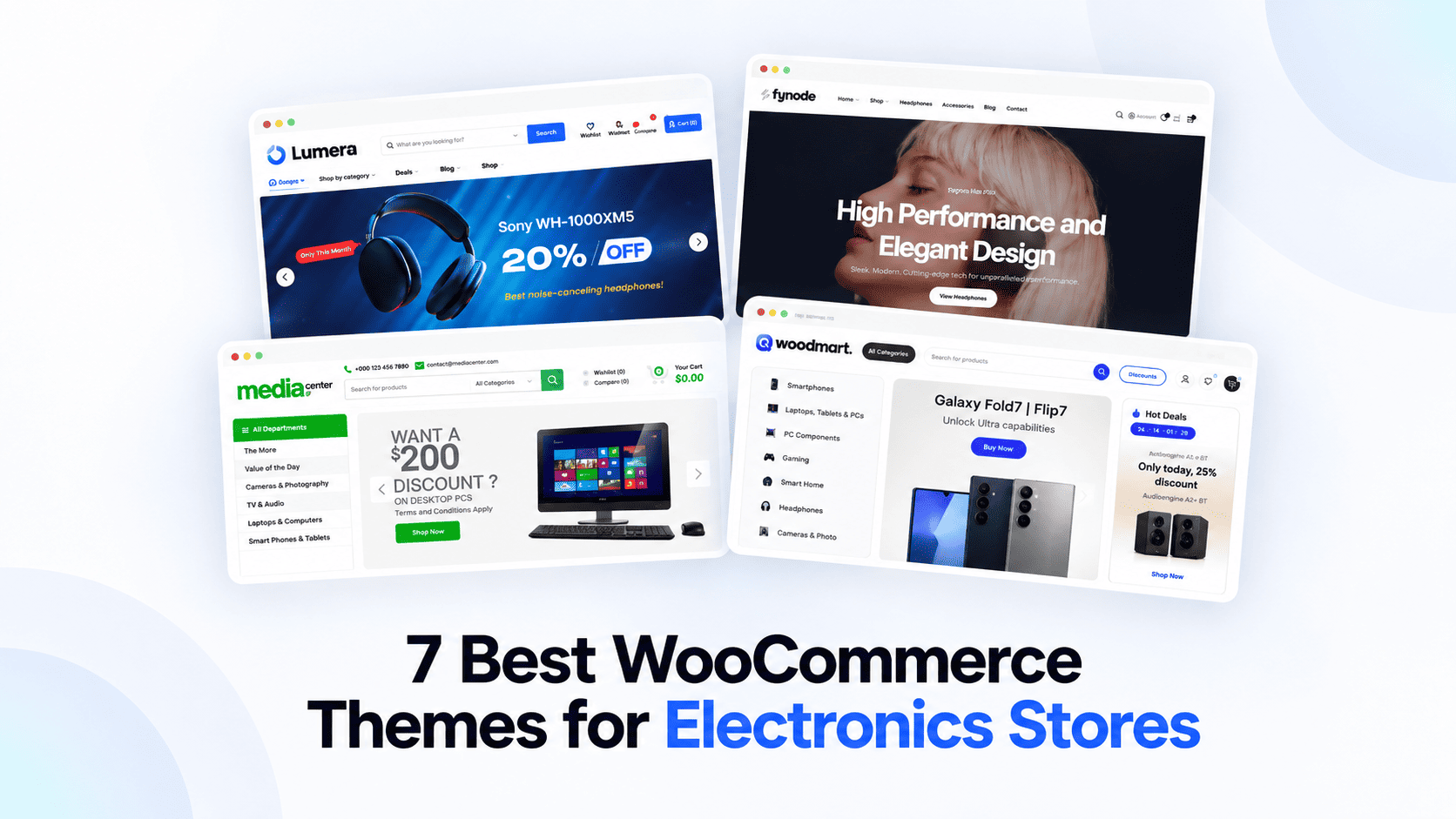
7 best WooCommerce themes for electronics stores in 2026

Choosing a WooCommerce theme for an electronics store is not only about finding a design that looks good.
Electronics catalogs tend to be more complex than many other online stores. Customers may compare several products before buying, filter by technical specifications, search for exact model names or SKUs, switch between product variations, check compatibility, and browse dozens of brands and categories.
That puts more pressure on your theme.
A good electronics WooCommerce theme should make a large catalog easy to navigate while keeping product discovery fast on both desktop and mobile. Features such as AJAX search, advanced filters, product comparison, mega menus, variation swatches, and well-structured product pages can make a significant difference.
In this guide, we compare seven WooCommerce themes that can work particularly well for electronics stores.
Quick comparison
| Theme | Best for | Page builder | Electronics-focused demos | Large catalog features |
|---|---|---|---|---|
| WoodMart | Feature-rich and growing electronics stores | Elementor, WPBakery | Yes | Extensive |
| Electro | Traditional electronics stores and marketplaces | Elementor, WPBakery | Yes | Extensive |
| Machic | Elementor-based electronics marketplaces | Elementor | Yes | Strong |
| Electron | Flexible Elementor customization | Elementor | Yes | Strong |
| Fynode | Modern electronics and tools stores | Elementor | Yes | Strong |
| MediaCenter | Classic electronics retail layouts | WPBakery | Yes | Good |
| Lumera | Smaller modern electronics stores | Elementor | Yes | Good |
There is no single theme that is ideal for every electronics store. A small shop selling a limited range of accessories has very different requirements from a marketplace with thousands of laptops, components, TVs, and smartphones.
The sections below focus on those differences.
Disclosure: WoodMart is developed by XTemos, the company publishing this guide. We have included it because it is one of the WooCommerce themes we evaluated for electronics stores. We have also included competing themes and highlight both advantages and limitations where relevant.
What we looked for in an electronics WooCommerce theme
Before looking at individual themes, it is useful to define what actually matters for this type of store.
Product search
A customer looking for a specific laptop, processor, phone model, or replacement component often already knows what they want.
Search therefore needs to be easy to find and able to return useful results quickly. Live search suggestions can reduce the number of steps between entering a query and opening a product.
For larger catalogs, support for searching additional product data such as SKUs becomes even more useful.
Product filtering
Filters are particularly important for electronics stores because products often have many technical attributes.
A laptop category, for example, may need filters for:
- brand;
- processor;
- RAM;
- storage;
- display size;
- graphics card;
- price;
- availability.
The theme should provide enough flexibility to expose those attributes without turning the shop page into a cluttered sidebar.
Mobile filtering deserves particular attention because there is much less screen space available.
Product comparison
Electronics are frequently comparison-driven purchases.
A customer deciding between three monitors may want to compare screen size, resolution, refresh rate, panel type, ports, and price without repeatedly opening different tabs.
Built-in comparison functionality — or good integration with a comparison solution — can therefore be more valuable for electronics stores than it is for many other WooCommerce niches.
Large catalog navigation
Once an electronics catalog grows, a basic navigation menu is rarely enough.
Mega menus, category navigation, brands, breadcrumbs, product categories, and well-designed shop layouts can help users move through a large catalog without getting lost.
Product page flexibility
Electronics product pages often contain more information than a typical fashion or lifestyle product.
Useful capabilities can include:
- specification tables;
- variation swatches;
- product videos;
- image galleries;
- reviews;
- related accessories;
- frequently bought together products;
- delivery information;
- stock status;
- product comparison.
The ability to organize this information clearly matters as much as the number of features available.
Mobile experience
A large percentage of product discovery happens on mobile, where complex navigation and filters can quickly become difficult to use.
We therefore favor themes that provide mobile-friendly menus, filters, search, product galleries, and purchasing flows rather than simply shrinking their desktop layout.
Performance and maintainability
Electronics stores can become resource-intensive as the number of products, variations, filters, images, plugins, and third-party integrations grows.
A theme should not create unnecessary complexity, and it should continue receiving updates as WordPress and WooCommerce evolve.
With those criteria in mind, here are seven WooCommerce themes worth considering.
1. WoodMart — best for feature-rich electronics stores
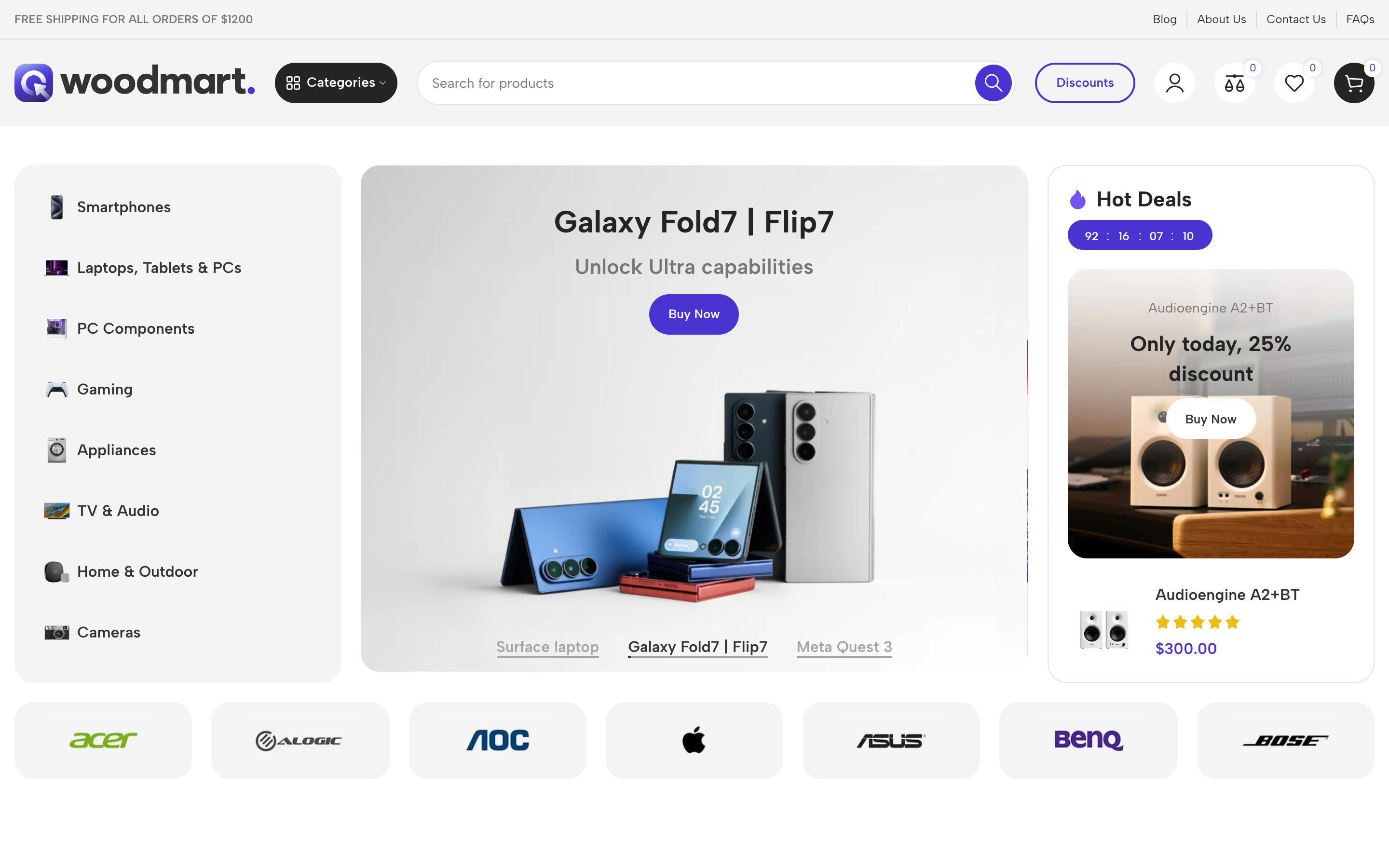
WoodMart is a multipurpose WooCommerce theme rather than a theme built exclusively for electronics. That can actually be an advantage for stores that need more than a predefined electronics design.
Instead of focusing only on a particular visual style, WoodMart includes a broad set of WooCommerce functionality for product discovery, catalog navigation, merchandising, and customization.
It also includes dedicated electronics demo sites that show how these features can work together in a technology-focused catalog.
WoodMart is actively maintained and supports both Elementor and WPBakery. Its ThemeForest listing was last updated on September 25, 2026.
Why WoodMart works well for electronics
Search and filtering are two of the strongest reasons to consider WoodMart for this use case.
For a store with hundreds or thousands of products, users need to move from a broad category to a small group of relevant products quickly. WoodMart provides AJAX-based shop functionality and filtering tools that can be combined with product attributes such as brand, size, storage, technical specifications, or price.
Product comparison is useful for categories where customers need to evaluate several similar products side by side.
WoodMart also provides functionality such as wishlists, variation swatches, mega menus, product galleries, quick view, and other WooCommerce-focused elements that would otherwise often require several separate plugins.
For stores with more complex requirements, WoodMart’s layout-building capabilities provide additional control over shop archives, individual product layouts, headers, and other parts of the store.
The electronics demos are particularly useful as a starting point because they demonstrate how a large technology catalog can be organized rather than simply changing the colors of a generic shop template.
Pros
- Extensive WooCommerce functionality included in the theme
- Strong search and filtering options for larger catalogs
- Product comparison and wishlist functionality
- Multiple electronics-oriented demo designs
- Elementor and WPBakery support
- Flexible product, shop, header, and layout customization
- Suitable for stores that expect their catalog to grow
Cons
- The number of options can be more than a very small store needs
- New users may need some time to learn where different theme settings are located
- Because it is multipurpose, you need to choose and configure the features relevant to your particular store
Best for
WoodMart makes the most sense for medium to large electronics stores that want advanced WooCommerce functionality without building the shopping experience from a large collection of separate plugins.
It is also a good fit when the store needs room to evolve beyond its initial design.
2. Electro — best for traditional electronics marketplaces
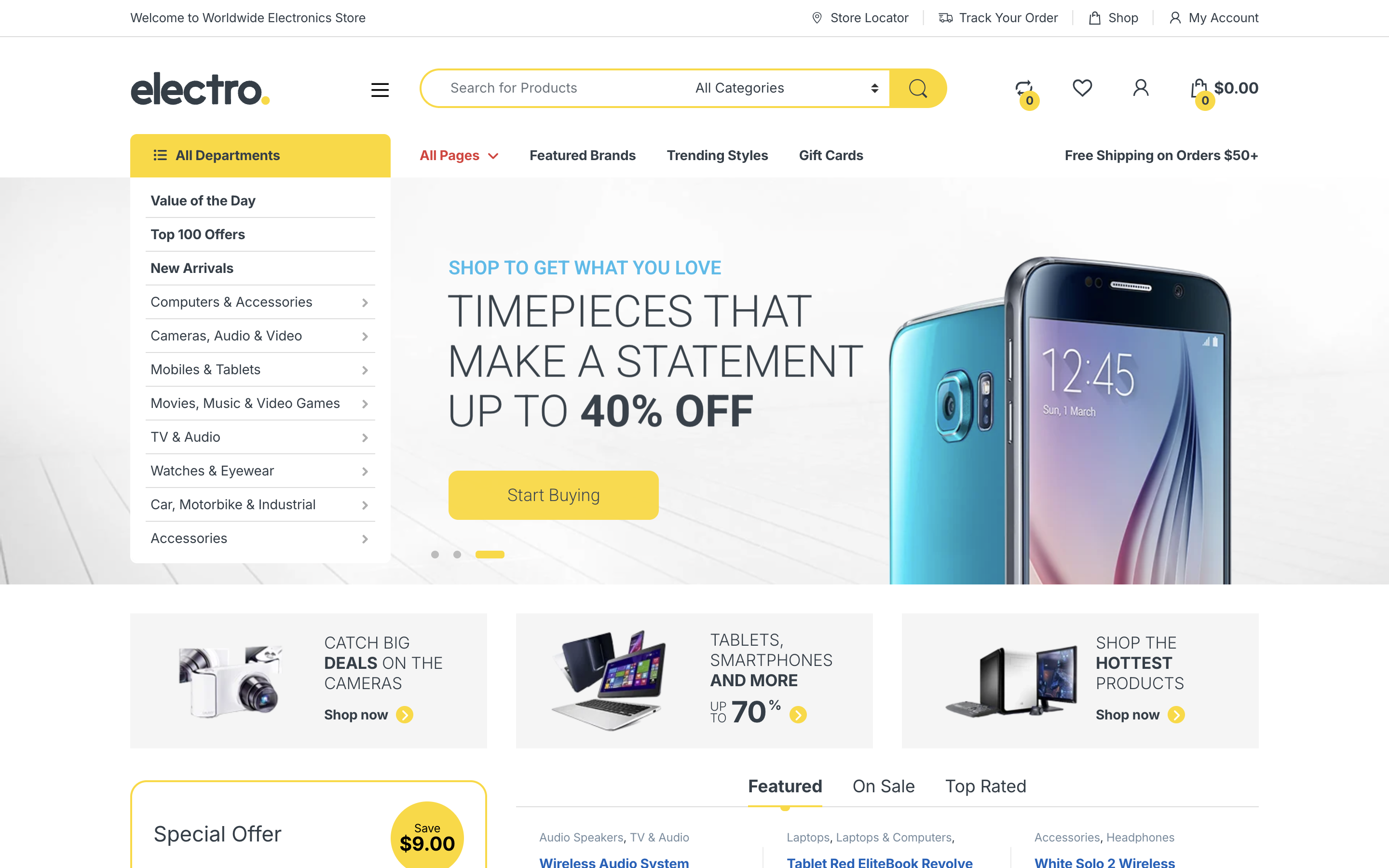
Electro by MadrasThemes is one of the longest-established WordPress themes created specifically for electronics retail.
Its visual approach will be familiar to anyone who has used large online marketplaces: prominent search, dense category navigation, product grids, deals, banners, and a strong emphasis on fitting many products onto a page.
The theme supports both Elementor and WPBakery and integrates with WooCommerce as well as tools such as YITH WooCommerce Wishlist and YITH WooCompare. ThemeForest currently lists more than 25,000 sales, making Electro one of the more established dedicated electronics WooCommerce themes.
Why Electro works well for electronics
The main advantage of Electro is that it was designed around this type of catalog from the beginning.
Its layouts naturally fit stores selling phones, computers, appliances, accessories, and other technology products. Large menus, product categories, promotions, and dense product grids are an integral part of the design.
That makes Electro particularly useful when you want the familiar feel of a large electronics retailer rather than a more minimal ecommerce design.
It is also positioned for marketplaces, affiliate sites, and vendor-based stores in addition to conventional WooCommerce shops.
Pros
- Designed specifically for electronics ecommerce
- Established theme with a large user base
- Marketplace-style layouts
- Elementor and WPBakery compatibility
- Good fit for large category structures
- Wishlist and comparison integrations
Cons
- The marketplace-style visual language may feel too dense for smaller or more premium stores
- Some functionality relies on integrations with additional plugins
- The design is relatively opinionated compared with broader multipurpose themes
Best for
Electro is worth considering for electronics retailers or marketplaces that want a traditional, information-dense ecommerce layout similar to major online electronics stores.
3. Machic — best for Elementor-based electronics marketplaces
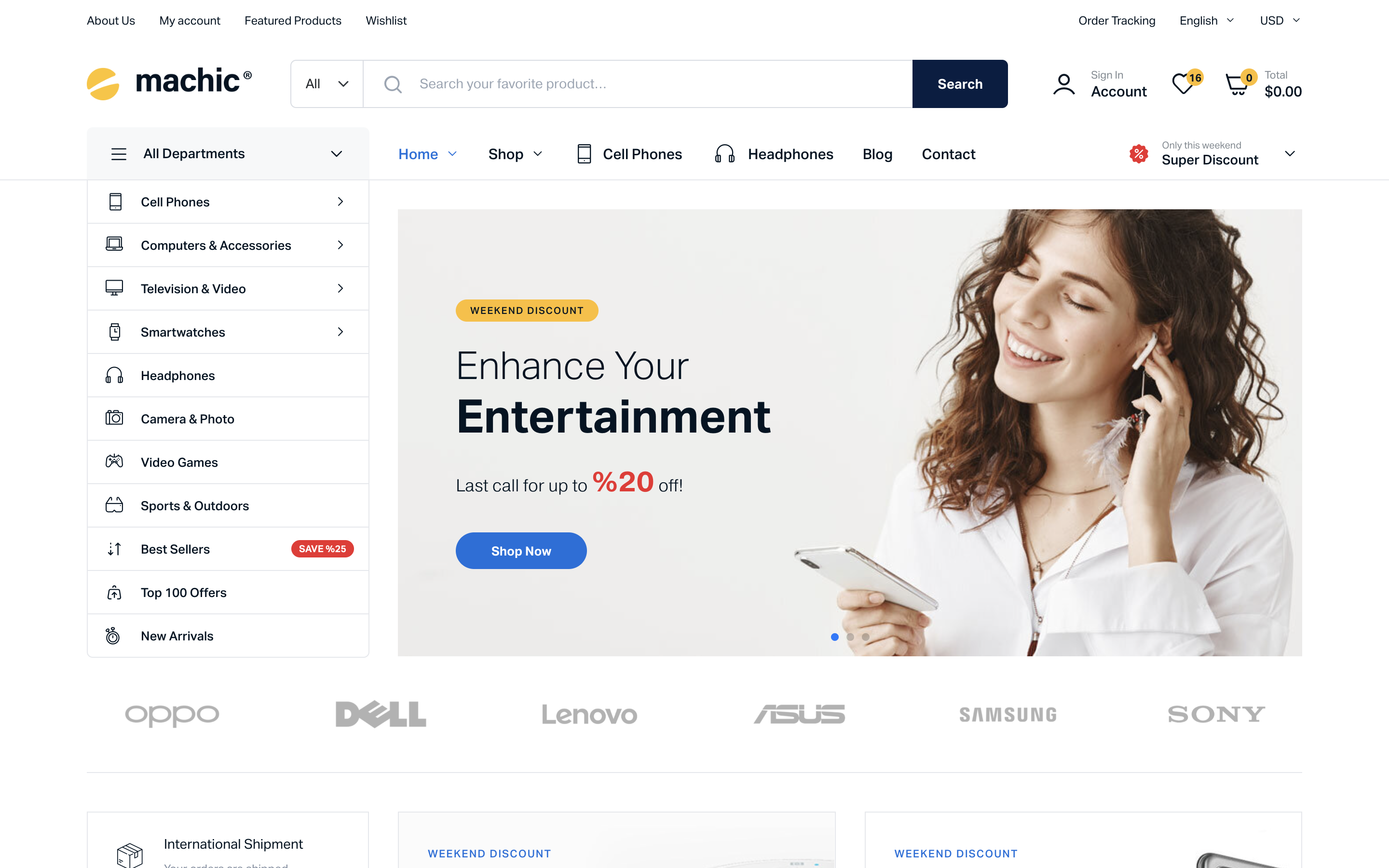
Machic is another WooCommerce theme built specifically around electronics and technology stores.
It uses Elementor and includes layouts for electronics shops, accessories, smartphones, household appliances, and marketplace-style stores. The theme is also marketed for multivendor configurations.
Machic remains actively maintained; its ThemeForest listing shows an update on September 10, 2026.
Why Machic works well for electronics
Machic combines an electronics-specific visual system with Elementor customization.
Its demos use common electronics ecommerce patterns: category-based navigation, promotional banners, product grids, deals, and prominent product search.
For a store owner who already prefers Elementor, that can make the initial setup more straightforward than starting with a completely generic WooCommerce theme and designing every store section from scratch.
The theme also includes AJAX-related ecommerce functionality and is positioned for both regular and multivendor electronics stores.
Pros
- Designed specifically for electronics
- Elementor-based editing
- Multiple electronics and technology use cases
- Marketplace and multivendor positioning
- Actively maintained
- Strong ready-made store aesthetic
Cons
- Less attractive if you prefer a builder other than Elementor
- More specialized than a broad multipurpose WooCommerce theme
- Stores that want a highly distinctive visual identity may need to customize the demo styling substantially
Best for
Machic is a strong option for store owners who want an electronics-specific design and prefer to build their site with Elementor.
4. Electron — best for Elementor customization
Despite the similar name, Electron is a separate WooCommerce theme by Ninetheme.
It takes a more multipurpose approach than Electro but places considerable emphasis on electronics ecommerce and Elementor customization.
The theme includes AJAX-oriented ecommerce functionality and can also be adapted to other product categories. Its ThemeForest listing currently shows more than 1,000 sales.
Why Electron works well for electronics
Electron is useful when you want an electronics starting point without being tied as closely to a classic marketplace design.
Its Elementor foundation provides considerable control over page content, while its ecommerce components cover many of the patterns expected from a modern WooCommerce shop.
This makes it particularly interesting for smaller and medium-sized stores that want electronics functionality but also expect to customize the appearance heavily.
Pros
- Elementor-focused workflow
- Modern electronics demos
- AJAX ecommerce functionality
- Flexible enough for other store types
- Good range of design components
Cons
- Its broad multipurpose scope means not every included feature is relevant to electronics
- Stores with very large catalogs should carefully test filtering and navigation with their real product structure
- Builder preference is important because Elementor is central to the experience
Best for
Electron suits Elementor users who want an electronics-oriented starting point but expect to customize the design rather than closely follow a predefined marketplace layout.
5. Fynode — best for a modern electronics store design
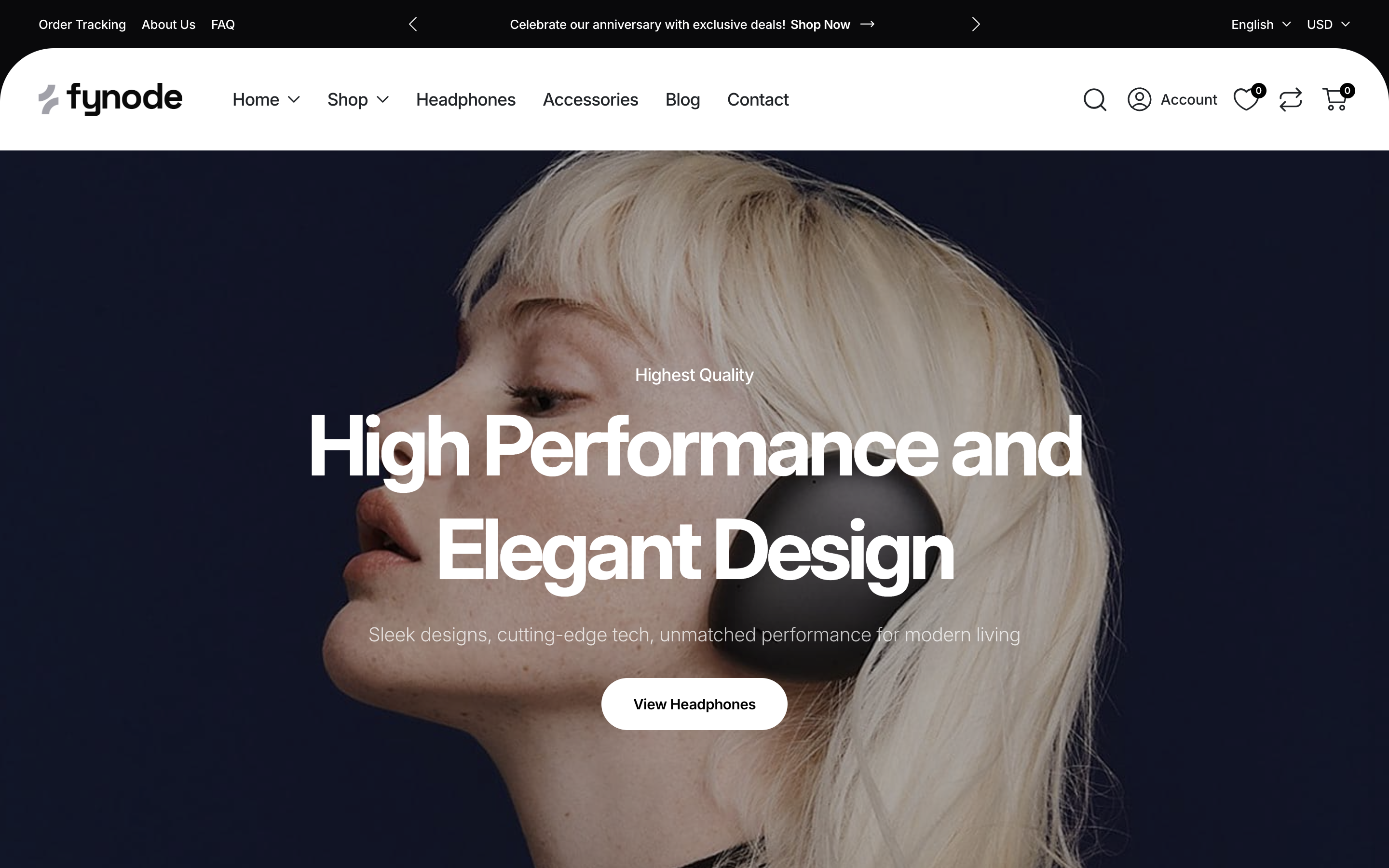
Fynode is a newer electronics and tools WooCommerce theme from KlbTheme, the same developer behind Machic.
It uses Elementor and targets electronics shops, accessories stores, phone shops, appliances, tools, and multivendor marketplaces.
Compared with some older electronics themes, Fynode has a more contemporary visual direction while retaining the product-heavy layouts that this niche requires.
Why Fynode works well for electronics
One advantage of newer ecommerce themes is that their design language often better reflects current expectations around spacing, cards, mobile interfaces, promotional sections, and product presentation.
Fynode still provides the dense catalog functionality expected from an electronics theme, but it packages it in a more recent visual style.
This can make it an interesting alternative if you like the concept behind traditional electronics themes but do not want your store to look like an older marketplace template.
Its ThemeForest listing shows active maintenance in September 2026.
Pros
- Modern electronics-focused design
- Elementor compatibility
- Suitable for electronics, tools, accessories, and appliances
- Marketplace-oriented options
- Actively maintained
Cons
- Newer theme with a smaller installed base than long-established alternatives
- Less historical track record than themes such as WoodMart or Electro
- Mainly attractive to Elementor users
Best for
Fynode is worth exploring for new electronics stores that want a current visual style and an Elementor-based workflow.
6. MediaCenter — best for a classic electronics retail structure
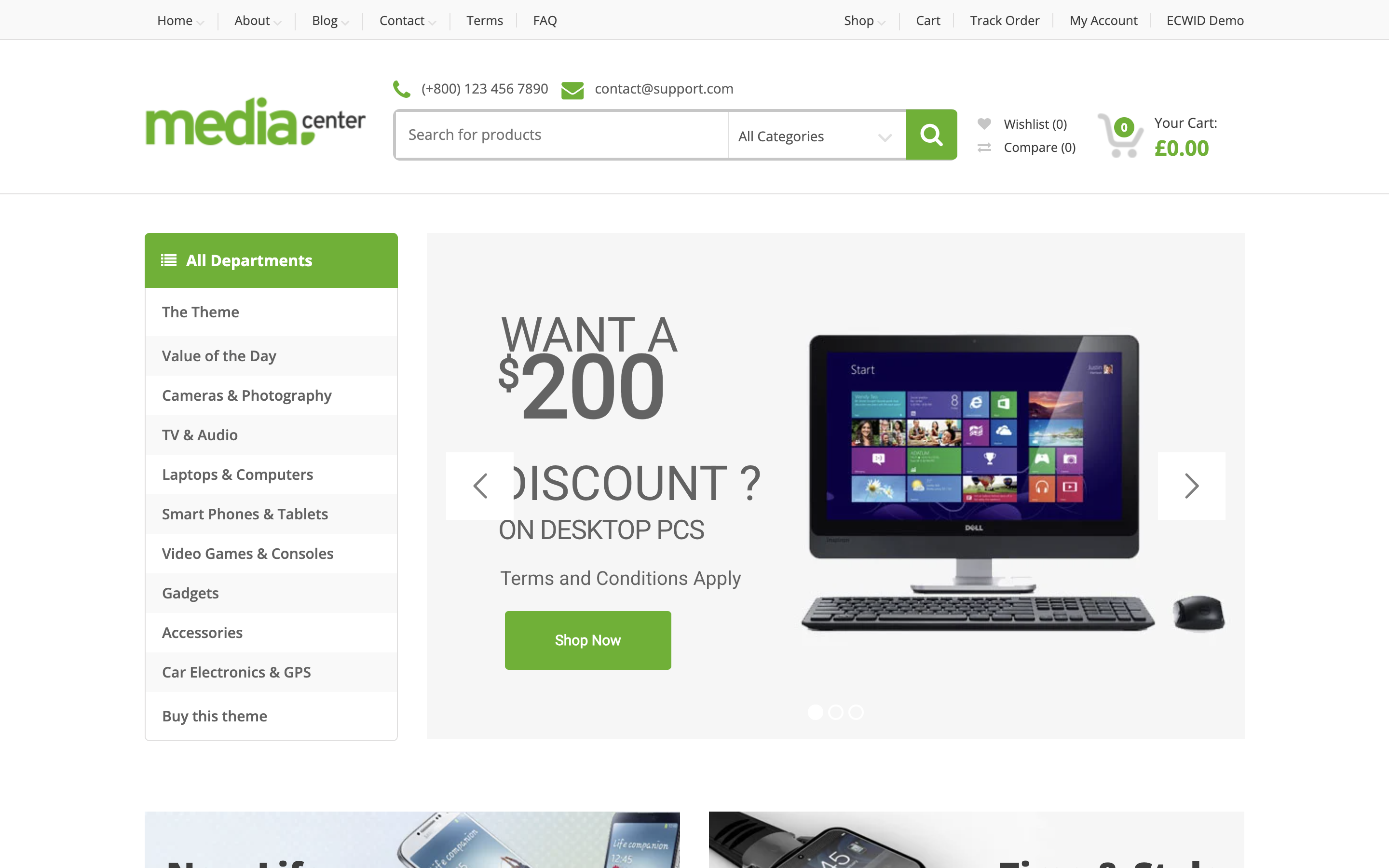
MediaCenter is another electronics-specific WooCommerce theme from MadrasThemes.
Its structure follows many of the conventions of traditional online electronics retailers: clear categories, dense product listings, promotional areas, and navigation designed for stores with many different types of products.
The theme has accumulated roughly 2,500 sales on ThemeForest.
Why MediaCenter works well for electronics
MediaCenter’s main strength is focus.
You are not starting with a generic business theme and adapting it to ecommerce. The layouts were built around electronics retail from the outset.
This makes it easier to imagine categories such as laptops, cameras, phones, home appliances, or accessories within the supplied store structure.
However, MediaCenter is an older product than several options in this list. Its ThemeForest search listing shows its last update in July 2025, so prospective users should verify current WordPress, WooCommerce, plugin, and support compatibility before choosing it for a new long-term project.
Pros
- Built specifically for electronics retail
- Established theme with a long track record
- Good category-oriented store structure
- Suitable for large inventories
Cons
- Older design and product history
- Less modern customization workflow than newer alternatives
- Current compatibility should be checked carefully before starting a new project
Best for
MediaCenter is mainly worth considering for stores that prefer its classic electronics-retail structure or existing projects already using the theme.
For a completely new project, compare its current maintenance status carefully with newer alternatives.
7. Lumera — best for smaller modern electronics catalogs
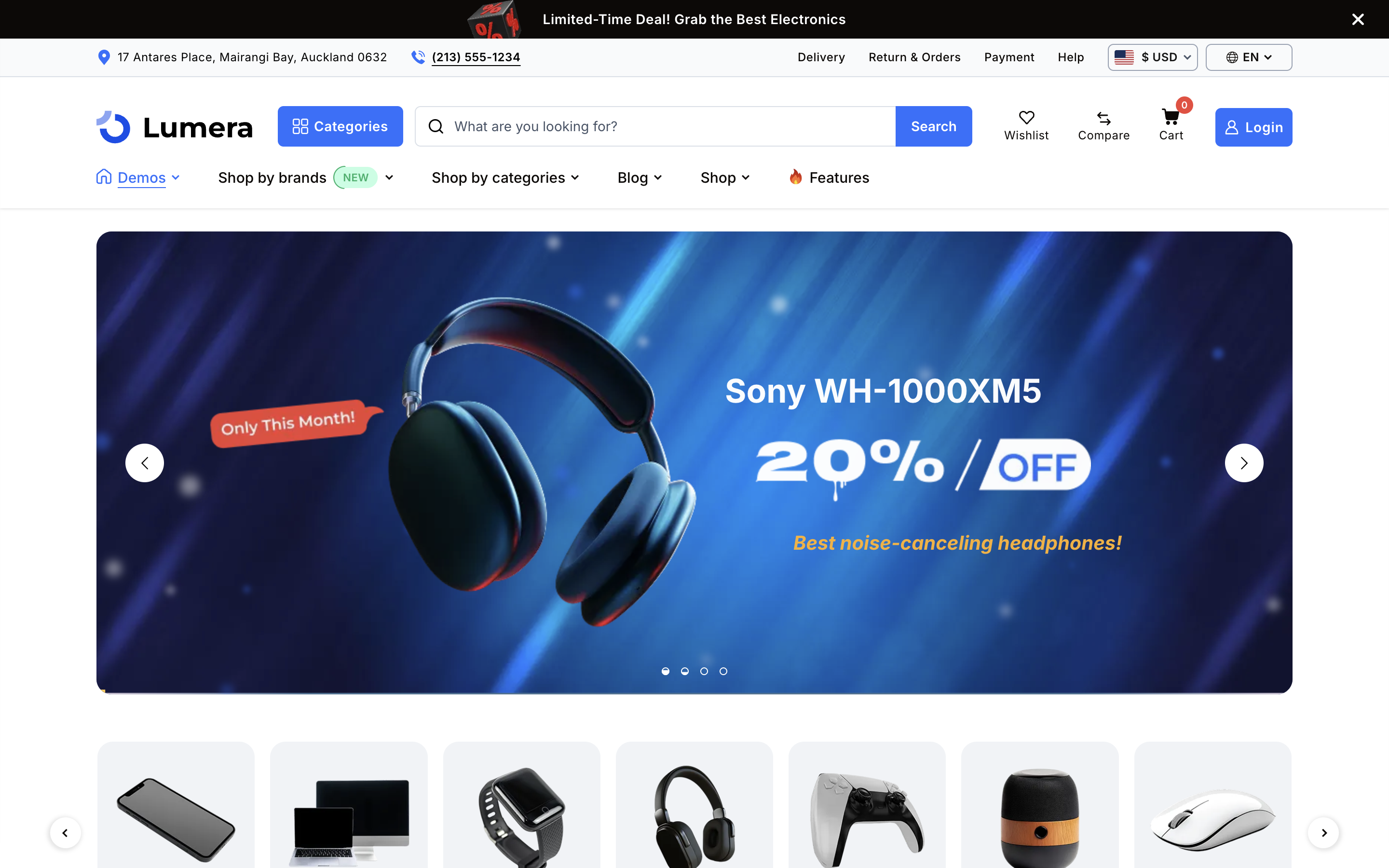
Lumera is a more recent electronics WooCommerce theme that combines Elementor with ecommerce features including AJAX product filtering and instant product search.
Its ThemeForest listing also highlights header, footer, and mega-menu building functionality.
That feature set covers several of the most important requirements for an electronics catalog without necessarily aiming for the same scale or complexity as some of the larger themes in this comparison.
Why Lumera works well for electronics
Search, filters, and navigation are the areas where a specialized electronics theme can provide the most practical value.
Lumera includes those concepts directly in its feature set and provides an electronics-oriented design as the starting point.
It may therefore appeal to stores that want the essential catalog experience without the larger ecosystem and extensive configuration available in themes such as WoodMart.
Pros
- Electronics-specific design
- AJAX filtering
- Instant product search
- Elementor compatibility
- Header, footer, and mega-menu building tools
- Contemporary visual approach
Cons
- Much smaller installed base than established alternatives
- Less community history and long-term track record
- Large or complex stores should test the theme carefully with realistic catalog data before committing
Best for
Lumera is an option for smaller or newer electronics stores that want a modern Elementor theme with search and filtering functionality built around ecommerce.
How to choose the right electronics WooCommerce theme
The themes above can all be used to build an electronics store, but that does not make them interchangeable.
Your catalog and business model should determine which features matter most.
For a large electronics catalog
Prioritize:
- powerful search;
- attribute filters;
- mega menus;
- category navigation;
- product comparison;
- mobile filters;
- flexible product templates.
For this type of store, WoodMart and Electro are natural candidates to evaluate because both provide broader tooling for complex ecommerce catalogs.
For a marketplace
Look closely at how the theme works with your chosen multivendor solution rather than choosing based on homepage appearance alone.
Electro and Machic are both designed with marketplace-style stores in mind.
Also test vendor pages, product search, filters, account screens, and mobile navigation with the multivendor plugin you actually intend to use.
For a smaller electronics store
You may not need every advanced ecommerce feature.
If you sell 30 carefully selected audio products, for example, massive mega menus and dozens of filtering options can make the experience worse rather than better.
A simpler Elementor-oriented setup such as Electron, Fynode, or Lumera may provide enough flexibility without requiring a complex catalog structure.
WoodMart can also be simplified considerably, but its feature set may be broader than a small store requires.
For stores expecting to grow
Consider not only what the store needs now but what will happen when the catalog expands.
Switching WordPress themes later is possible, but rebuilding custom layouts and replacing theme-specific functionality takes time.
If you expect a catalog of 100 products to become 5,000 products, features such as advanced filtering, search, comparison, layout customization, and performance controls become much more important.
Test a theme with real products before making a decision
A demo can tell you whether you like the design. It cannot tell you whether the theme will work well with your catalog.
Before committing to any WooCommerce theme, test the experience using product data that resembles your actual store.
Pay particular attention to the following tasks:
- Search for a specific product model.
- Browse from a top-level category to a narrow subcategory.
- Apply several attribute filters at once.
- Compare similar products.
- Select product variations.
- Navigate the shop on a mobile device.
- Add products to the cart and complete the checkout flow.
- Check how long specification-heavy product pages feel.
- Test the site with the plugins you actually plan to use.
A theme with the most features is not automatically the best choice.
The best setup is the one that helps customers find the right product with the least friction while remaining manageable for the team running the store.
Frequently asked questions
What is the best WooCommerce theme for an electronics store?
It depends on the size and structure of the store.
WoodMart is particularly well suited to feature-rich and growing WooCommerce stores because it combines advanced catalog functionality with extensive layout customization.
Electro is a strong alternative when you specifically want the traditional appearance and structure of a large electronics marketplace.
Themes such as Machic, Electron, Fynode, and Lumera may be attractive if Elementor is central to your workflow and you prefer a more predefined electronics-oriented design.
What features should an electronics WooCommerce theme have?
For most electronics stores, the most important features are product search, attribute filtering, clear category navigation, mobile usability, well-structured product pages, and good performance.
For larger catalogs, product comparison, mega menus, brand navigation, advanced filters, wishlists, and flexible product layouts become increasingly useful.
Do electronics stores need product comparison?
Not every store needs it, but comparison is particularly valuable for electronics.
Products such as laptops, monitors, smartphones, cameras, processors, and appliances often differ by several technical specifications. Showing those differences side by side can make product selection easier.
Do I need a theme made specifically for electronics?
No.
A specialized electronics theme can provide useful ready-made layouts, but a flexible WooCommerce theme can work equally well if it provides the catalog functionality you need.
WoodMart is an example of a multipurpose WooCommerce theme that includes electronics demos while allowing the same underlying system to be adapted to very different store designs.
The more important question is whether the theme handles your catalog, filters, navigation, search, product information, mobile experience, and future requirements effectively.
Is Elementor required for an electronics WooCommerce store?
No.
Elementor can make visual customization easier and is supported by many of the themes in this comparison, but WooCommerce does not require it.
Choose a page-building workflow based on how you plan to maintain the site rather than treating a particular builder as a requirement for selling electronics.
Can WooCommerce handle a large electronics catalog?
WooCommerce can power large product catalogs, but the final result depends on much more than the theme.
Hosting, database optimization, caching, product structure, plugins, search implementation, images, filters, and custom code can all affect performance.
For a large catalog, evaluate the entire technical stack rather than expecting a theme alone to solve performance problems.
Final thoughts
An electronics WooCommerce theme has to do more than present attractive product cards.
Customers need to navigate complex categories, search for exact products, filter by specifications, compare alternatives, and understand detailed product information — often from a mobile device.
That is why the right theme depends heavily on the size and complexity of your catalog.
WoodMart is a strong fit for stores that want extensive WooCommerce functionality and room to customize or grow.
Electro provides a more specialized marketplace-style electronics experience.
Machic, Electron, and Fynode offer different Elementor-based approaches, while MediaCenter and Lumera cover more specific store requirements and design preferences.
Whichever theme you choose, avoid making the decision from a homepage demo alone.
Test search, filters, category navigation, product pages, comparison tools, and mobile UX using a catalog similar to the one your customers will actually browse. Those parts of the experience will usually matter far more than the design of the first screen.
